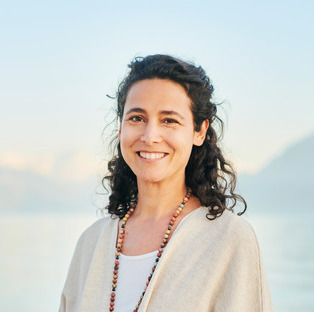
Francine Jensen, a pragmatic and creative scientific mind, ahead of her time.
I had the pleasure of speaking with Mrs. Jensen in her beautiful and artistic home,...
I had the pleasure of speaking with Mrs. Jensen in her beautiful and artistic home, filled with flowers, family photos, her own modern and vibrant paintings (self-taught) and so well organized! She likes color and order, and admires plant life and sunshine. Mrs. Jensen was born in Normandy, France (1933) and her father rose to great prominence as an electrical engineer. The family moved all about France when professional opportunities came his way, to the south of France, Reims, and eventually Paris. A lot of her strongest qualities were developed during the two years she lived under the German occupation of southern France. Her village went from a quiet town to hosting 100s of German soldiers who marched and yelled and occupied many of their buildings. She remembers this well, as a 7 year old where she had a lot of independence, responsibility, and was not indulged. Her philosophy was: things were the way they were and one simply had to move ahead, calmly.
The family, now with step-mom and a total of five kids moved to Paris while she was in her teens. Soon thereafter she worked for the American Hospital in Paris, and then moved to the famed Pasteur Institute, where she spent an extremely productive two years. She clearly had a zest for learning, and an instinct for pursuing novel lines of cellular biology and virology. In 1955 in France she made some monumental discoveries, upon which later several Nobel prizes can trace their origins to. Her ability to look at biologic puzzles with a creative lense was phenomenal. At that time she worked diligently on the polio vaccine, emphasizing patience, caution, meticulousness, and a mind open to novel possibilities. Based on her experience as a high level cellular researcher, she wishes that medicine today focused more on disease prevention rather than disease management. Very salient observation!
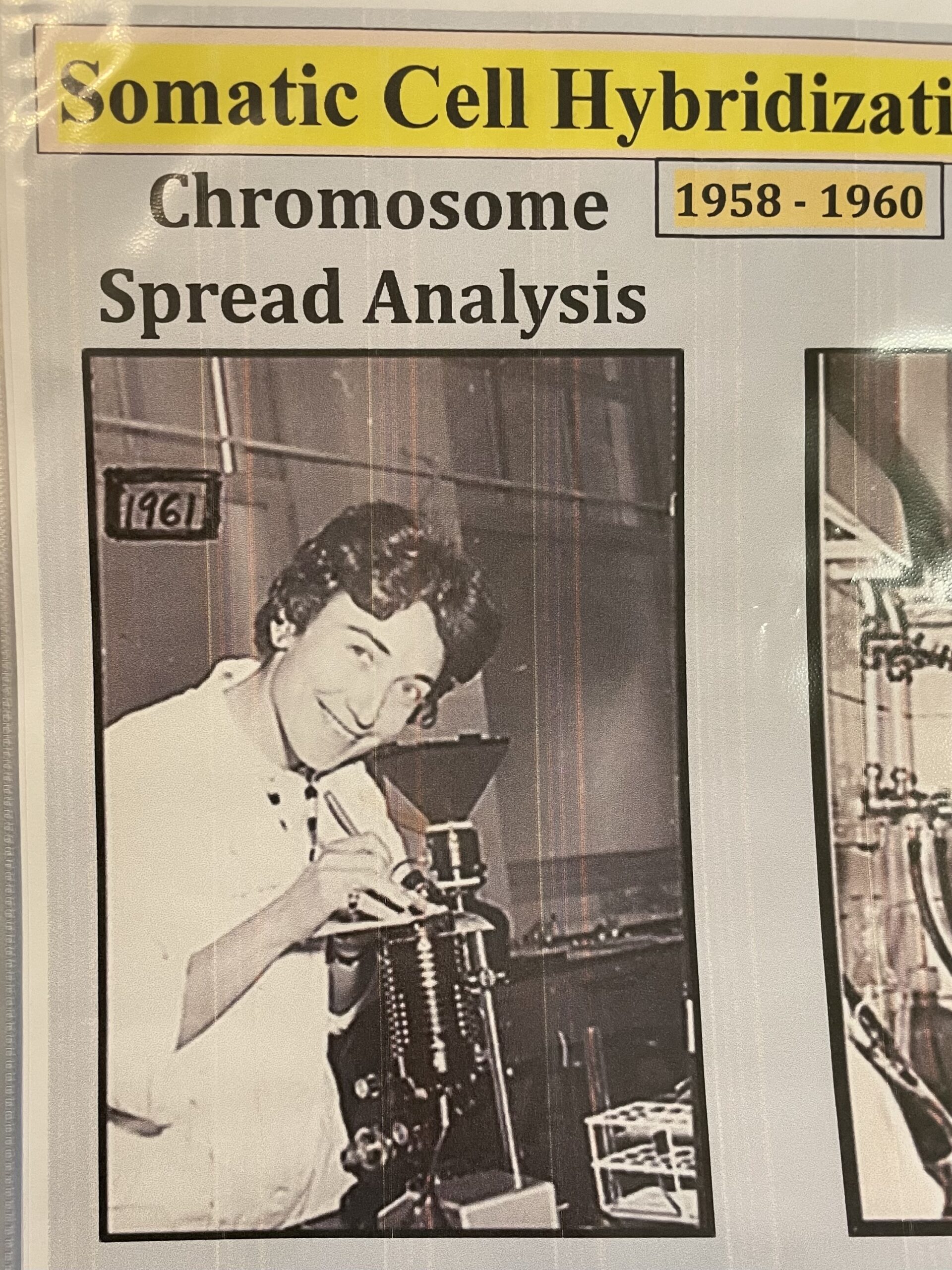
Having mastered techniques now mainstream for molecular biology and virology research, she moved into the field of cancer at France’s first National Cancer Institute. She said modestly, “While there I made a discovery,” which was that cancer can come from a virus, not just a genetic mutation. Her paper was published and won an award from the New York Academy of Science. She was able to discern visually that the DNA of cancerous cells was abnormal. This was a completely new concept in science. Her findings were met with support, but also a bit of suspicion, “some dubiousness.” This notoriety in the late 1950s really proved her resiliency and increased her confidence. Her work lead to mapping genomes, the identification of cancer-causing genes, and it now used globally in immunology, virology and oncology research. She next took a position at the University of Pennsylvania and met her husband there (also a brilliant researcher) in 1965. By 1971 she, her husband and their two sons moved to La Jolla, CA where she worked at The Salk Institute. About that time she began to observe that the pursuit of knowledge in science was changing, and that economics and biotech were becoming the norm. Nevertheless, she worked for three local biotech companies before retiring at age 65. Now rooted in Southern California she enjoys the climate and the beach, noting that “it often seems like a vacation here” with the casual and relaxed atmosphere. When asked what she likes most about herself, or what she is most proud of, she humbly and succinctly said, “I never think of myself, I think of my family and grandchildren,” with whom she is very close.
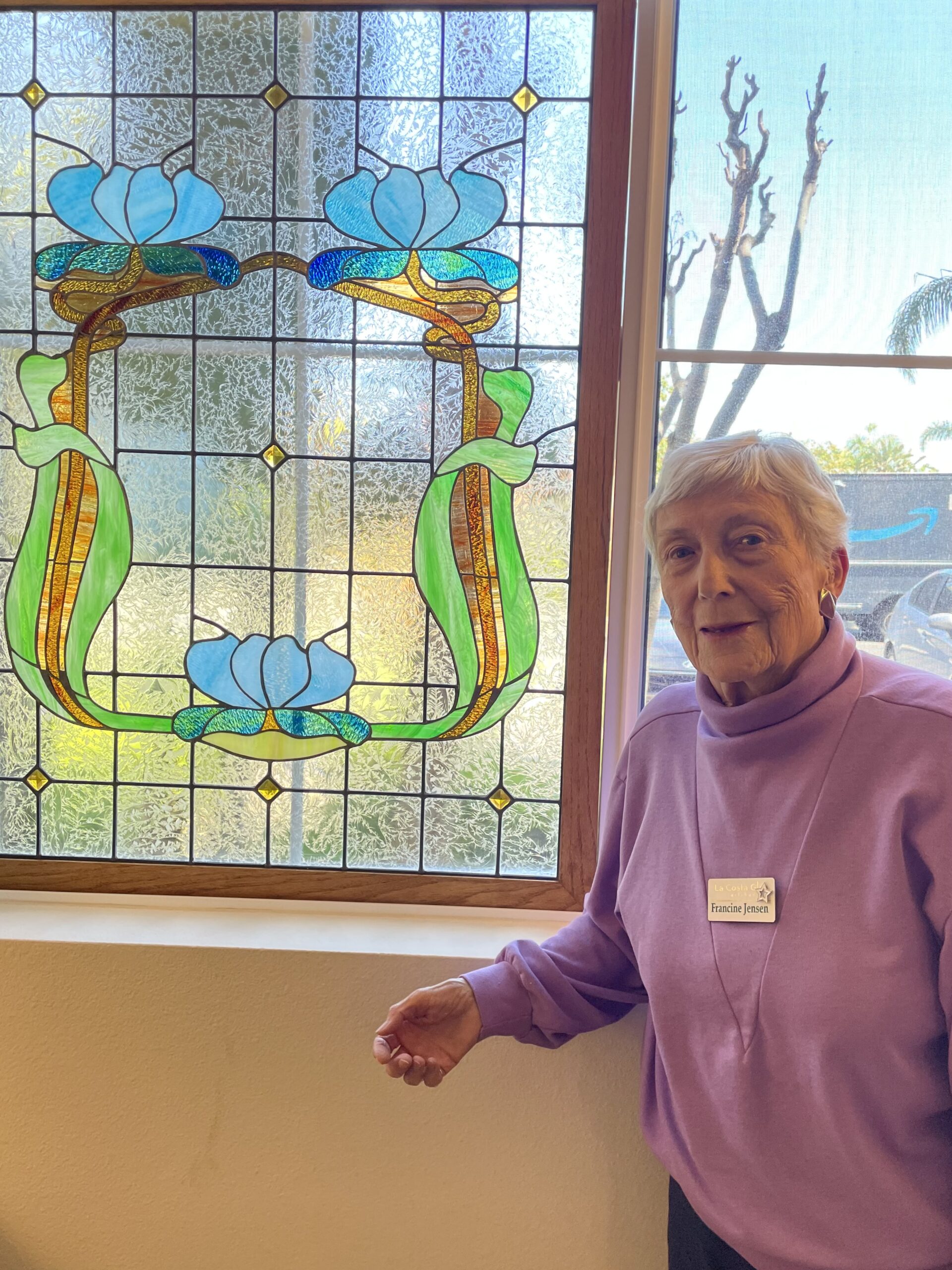
Francine Jensen is an open-minded, visionary scientific mind, who achieved early and consistently for decades, undaunted. She is also a self-taught painter and employs creativity in her research and personal endeavors. This stained glass window she calls her “masterpiece.” Indeed.
–Erika L. Reynolds, M.D. 03.25.2026